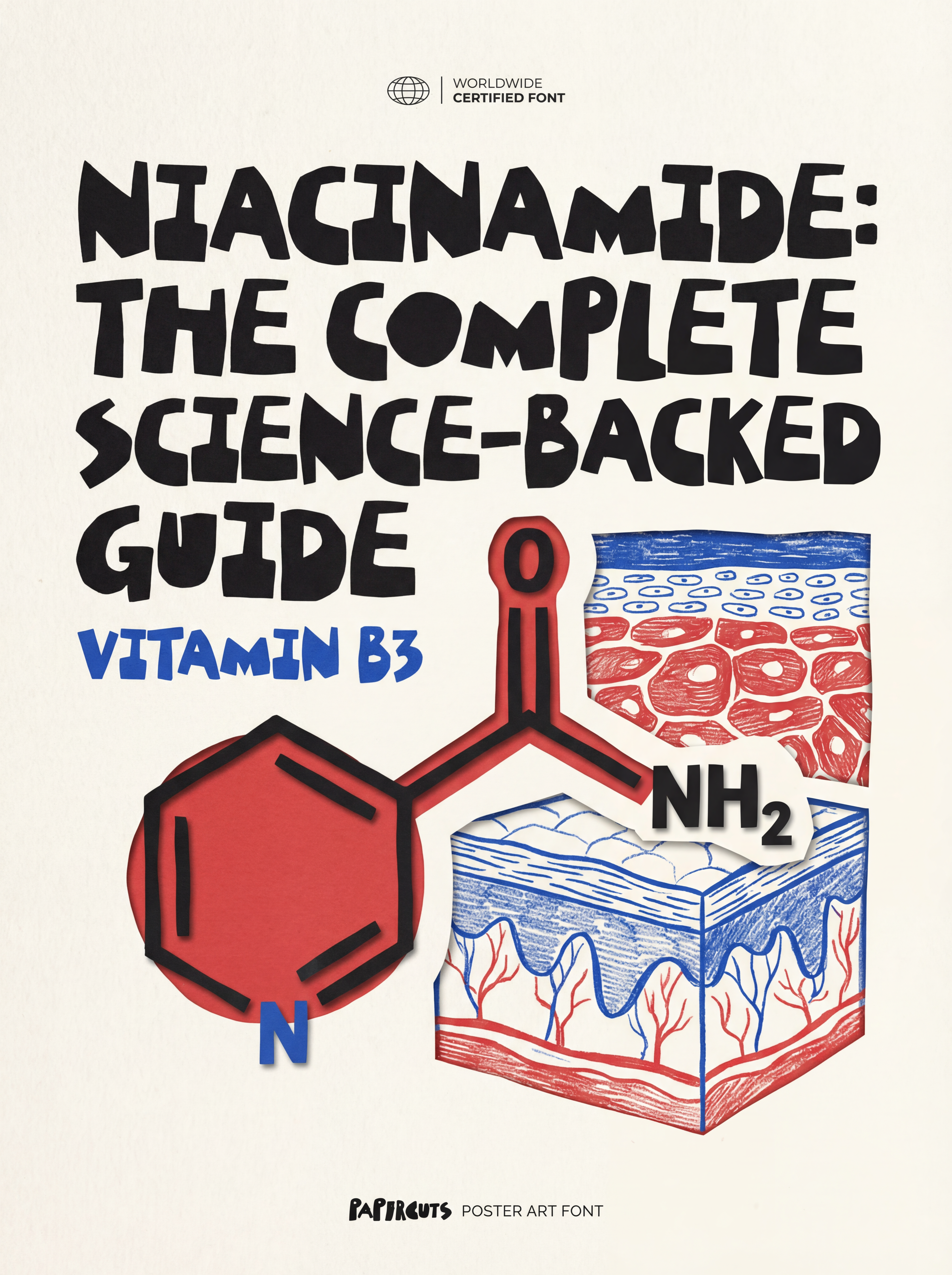
 # Niacinamide: The Complete Science-Backed Guide
Niacinamide (vitamin B3) has become one of the most popular skincare ingredients—and for good reason. But between marketing hype and actual science, what does the research really say?
What Is Niacinamide?
Niacinamide is the active form of vitamin B3 (niacin). Unlike many skincare ingredients, it's:
- Water-soluble
- Highly stable
- pH-independent (works across a wide pH range)
- Compatible with almost everything
"The data suggests that niacinamide operates through multiple pathways simultaneously, which explains its versatility. It's genuinely one of the most well-researched actives in cosmetic science." — Dr. Sarah Kim
 ## Proven Benefits
1. Barrier Repair
The Science: Niacinamide increases production of ceramides, fatty acids, and cholesterol—the key components of your skin barrier.
The Evidence: A 2005 study showed 4% niacinamide increased ceramide levels by 34% after 4 weeks.
2. Brightening & Hyperpigmentation
The Science: It inhibits melanosome transfer from melanocytes to keratinocytes—essentially preventing pigment from reaching the skin surface.
The Evidence: 5% niacinamide reduced hyperpigmentation by 35-68% across multiple studies.
3. Sebum Regulation
The Science: Niacinamide normalizes sebocyte activity without drying the skin.
The Evidence: 2% niacinamide reduced sebum excretion by 23% after 4 weeks.
4. Anti-Aging
The Science: Stimulates collagen production, reduces fine lines, and improves skin elasticity.
The Evidence: 5% niacinamide showed significant improvement in fine lines after 12 weeks.
Optimal Concentration
| Concentration | Best For | Notes |
|---|---|---|
| 2-4% | Sensitive skin, beginners | Effective but gentler |
| 5% | Most skin types | Sweet spot for efficacy |
| 10% | Oily skin, severe concerns | More isn't always better |
| 15-20% | Not recommended | Diminishing returns, potential irritation |
My Recommendation: Start with 5%. Higher isn't necessarily better—the research shows 5% delivers most benefits with minimal irritation risk.
What to Pair It With
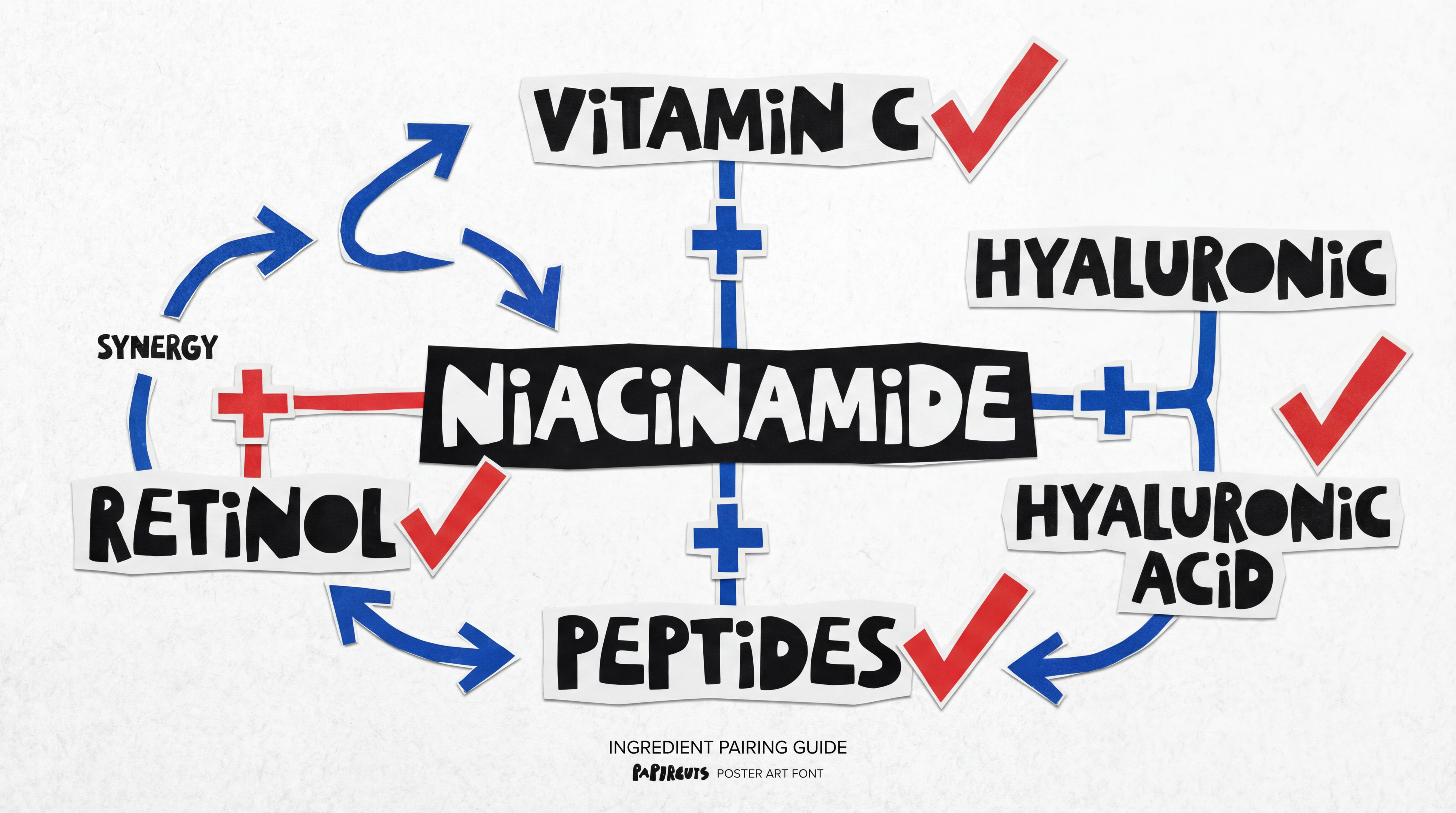
Excellent Combinations
| Ingredient | Why It Works |
|---|---|
| Hyaluronic Acid | Hydration synergy |
| Vitamin C | Despite myths, works fine together |
| Retinol | Niacinamide reduces retinol irritation |
| Salicylic Acid | Complementary mechanisms |
| Peptides | Enhanced barrier support |
Common Myths Debunked
Myth: Niacinamide + Vitamin C = Bad
Reality: This myth stems from old research on pure niacin, not niacinamide. Modern formulations are stable together.
Myth: Higher concentration = Better results
Reality: 5% provides optimal benefits. Higher concentrations may cause flushing without added efficacy.
How to Use It
Best Time: Morning and/or evening
Application Order:
- Cleanser
- Toner (if using)
- Niacinamide serum
- Other treatments
- Moisturizer
- SPF (AM only)
Who Should Use It
Ideal Candidates:
- Enlarged pores
- Uneven skin tone
- Oily or acne-prone skin
- Aging concerns
- Compromised barrier
Proceed with Caution:
- History of niacin sensitivity
- Extremely sensitive skin (start at 2%)
The Latest Research (2024-2025)
Recent studies have uncovered new benefits:
- Microbiome Support: Niacinamide may support beneficial skin bacteria
- Pollution Protection: Enhanced defense against environmental stressors
- Blue Light: Emerging evidence for protection against digital device emissions
Conclusion
Niacinamide deserves its popularity. It's well-researched, versatile, affordable, and suitable for nearly all skin types. The 5% concentration hits the sweet spot of efficacy without irritation.
Key Takeaways:
- Start with 5% concentration
- Works with almost all other actives
- Benefits barrier, brightness, and sebum control
- The vitamin C myth is exactly that—a myth
- More isn't always better
Have questions about ingredient science? Drop them in the comments.